
Because Behind Every Business, There’s a Person
Friday, November 6
How Long Does a Roof Last? (Real Lifespans by Material + Replacement Tips)
Articles on My Small Towns may be written for a business with a paid listing. When they are, that business is named as the author. How this site works.

If you’ve ever wondered how long your roof will last, you’re not alone. A roof quietly protects your home every day, but most homeowners don’t think about it until leaks or missing shingles appear. Roof lifespan varies widely, so understanding how each material ages can help you plan ahead and protect your property value.
Knowing the average lifespan of different roofing materials helps you budget smartly and avoid surprises when replacement time comes.
The Problem: Roofs Don’t Last Forever
Even the best roofing system wears down over time. UV rays, heavy rain, high winds, and poor ventilation all speed up the aging process.
For example, in Florida’s intense sun and humidity, an asphalt shingle roof may only last 18-20 years, while the same roof in a cooler northern climate could reach 25-30 years.
“In Florida’s coastal heat our asphalt shingle roofs often hit the 18-year mark, not the 25 or 30 years you see in other states. Once the UV and salt get in, degradation accelerates fast.”
— Mike T., Lead Roofing Technician, St. Johns County
That’s why understanding your roof’s real-world lifespan, not just the manufacturer’s estimate is so important.
Average Roof Lifespans by Material
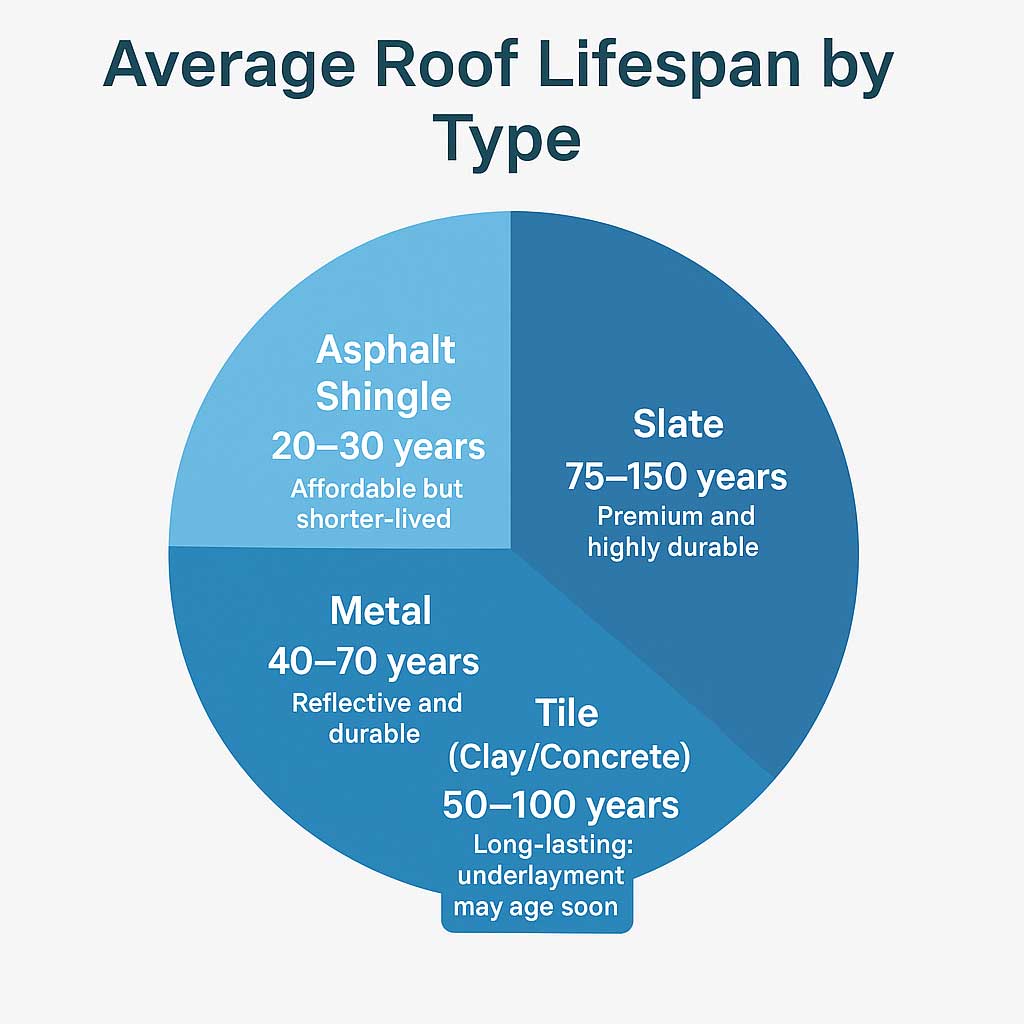
| Roof Type | Average Lifespan | Notes |
|---|---|---|
| Asphalt Shingle | 20–30 years | Affordable but shorter-lived |
| Metal | 40–70 years | Reflective and durable |
| Tile (Clay/Concrete) | 50–100 years | Long-lasting; underlayment may age sooner |
| Slate | 75–150 years | Premium and highly durable |
Asphalt Shingles (Most Common)

- Average lifespan: 20-30 years
- In hot or coastal areas: Often closer to 15-20 years
Asphalt shingles are cost-effective and easy to replace, but heat, UV rays, and improper attic ventilation can cause them to curl or crack early. Regular inspections and good ventilation help maximize their lifespan.
“Asphalt roofs are great when maintained, but they need care every few years. Small cracks or missing granules can spread quickly in this climate.”
— Renee M., Roofing Inspector, Clay County
Metal Roofing

- Average lifespan: 40-70 years
- In coastal regions: May require rust-resistant coatings
Metal roofs reflect heat and resist most weather damage, making them popular for energy efficiency. However, salt air can corrode cheaper metal types if not properly coated or maintained.
“If you want true longevity in this region you’re looking at tile or metal: a clay tile roof can easily outlive the house if installed right. The mistake many homeowners make is thinking shingles are ‘good for 30 years’ here.”
— Sarah L., Senior Project Manager, Clay County“We’ve replaced a lot of older steel panels that rusted from the sea air. Aluminum or coated galvalume performs far better in North Florida.”
— Daniel R., Roofing Foreman, St. Johns
Tile Roofing (Clay or Concrete)

- Average lifespan: 50-100 years
- In humid climates: Check regularly for underlayment wear
Tile roofs are durable and visually appealing. While the tiles themselves last decades, the underlayment beneath them may need replacement every 25-30 years to prevent leaks.
“Tiles rarely fail. It’s the material underneath that usually gives out first, especially in humid areas where moisture can build up unseen.”
— Laura K., Roof Maintenance Specialist, Green Cove Springs
Slate Roofing

- Average lifespan: 75-150 years
- Slate is one of the longest-lasting roofing materials available. It’s heavy and requires strong structural support, but when properly installed, it can outlast the house itself.
“Slate is an investment, but for historic or high-end homes it’s unbeatable. You’re paying for peace of mind that can last generations.”
— James P., Roofing Consultant, St. Johns
Signs It’s Time to Replace Your Roof
Don’t wait for leaks-these early warning signs indicate your roof may be nearing its end:
- Shingles are curling, cracked, or missing
- Granules are washing into gutters
- You notice dark streaks or moss growth
- Water stains appear on ceilings or attic wood
- Your roof is past 80% of its expected lifespan
When these signs show up, schedule an inspection before damage spreads.
Tips to Extend Your Roof’s Lifespan
Simple maintenance adds years to your roof and saves thousands on premature replacement. Clean gutters twice a year, trim overhanging branches, inspect after storms, and schedule professional checks every 2-3 years.
“Preventive maintenance is the cheapest insurance you can buy for your roof. Most of what we fix could have been caught early with a 15-minute inspection.”
— Mike T., Lead Roofing Technician, St. Johns County
Conclusion
Your roof’s lifespan depends on what it’s made of, how it’s maintained, and where you live. Whether you’re in a coastal climate or a cooler inland area, a professional inspection can tell you how much life is left in your roof.
Schedule your free roof inspection today to find out how much life remains in your roof and how to extend it cost-effectively.
Key Takeaways & Next Steps
Keeping up with maintenance and understanding your roof’s expected lifespan is the best way to protect your investment.
Checklist:
- Know your material type and its typical lifespan range.
- Inspect after major weather events and at least once a year.
- Watch for aging signs like curling shingles or leaks.
- Keep gutters and ventilation clear.
- Schedule a free inspection if your roof is over 15 years old or showing wear.
A little attention today can extend your roof’s life for years to come.
FAQs
Here are a few of the most common questions homeowners ask about roof lifespan and replacement.
How do I know what type of roof I have?
Look for distinct textures and materials: asphalt shingles are flexible and grainy, metal roofs have panels or standing seams, and tile or slate roofs have individual curved or flat pieces.
Can I replace just part of my roof?
Yes, but it depends on the age and material. If your roof is close to its full lifespan, replacing only a section may not be cost-effective long-term.
What’s the best roof for hot climates?
Metal and tile roofs perform best in high heat, reflecting sunlight and resisting UV damage better than asphalt shingles.
Does a new roof add value to my home?
Absolutely. A new roof boosts curb appeal and can raise resale value by up to 60% of the installation cost, depending on your market.
Florida & Local Climate Resources
| Resource | Website | Description |
|---|---|---|
| Florida Building Code – Roofing Section | floridabuilding.org | State-specific roofing codes, wind ratings, and installation standards. |
| University of Florida IFAS Extension | sfyl.ifas.ufl.edu | Local insights on weather impacts, storm prep, and home maintenance in Florida. |
| NOAA National Weather Service – Jacksonville Office | weather.gov/jax | Weather patterns and storm data affecting roof lifespan in Clay and St. Johns Counties. |
Related reading: Navigating Divorce: How to Ensure a Fair Settlement
Related reading: How to Choose the Right Facelift for Your Needs
Related reading: Choosing the Right Drone Videography for Real Estate Projects
Before you spend thousands on a service provider…
get a second opinion.
Upload two quotes and get a side-by-side comparison, pricing breakdown, and expert recommendation.
Avoid overpaying and choose the right company with confidence.
Discover:
- What’s overpriced
- What’s missing
- What actually matters
We break it all down for you instantly.
Upload your quotes. Get answers instantly.
More Articles


Quick Facts Board Certification Matters: Look for ABPS or ASPS affiliations. Specialized Experience Is Key: Ask how often they perform your exact procedure. Recovery Support Varies: Some offer drainless and ...

Navigate alimony negotiations peacefully with practical strategies for fair divorce settlements. Local resources and expert tips for Jacksonville residents seeking amicable solutio

Professional video marketing can revolutionize your local business visibility and customer engagement, driving measurable growth in today's digital landscape.

Discover how to choose the right facelift technique in Jacksonville based on your age and skin type. Compare mini-lifts, standard facelifts, and non-surgical alternatives.

SEO stands for Search Engine Optimization. In simple terms, it’s everything you do to help your website show up higher in Google’s search results.
When someone types “best Italian restaurant in Jacksonville,” Google looks for sites that seem relevant and trustworthy.


